
- Home
- Latest news
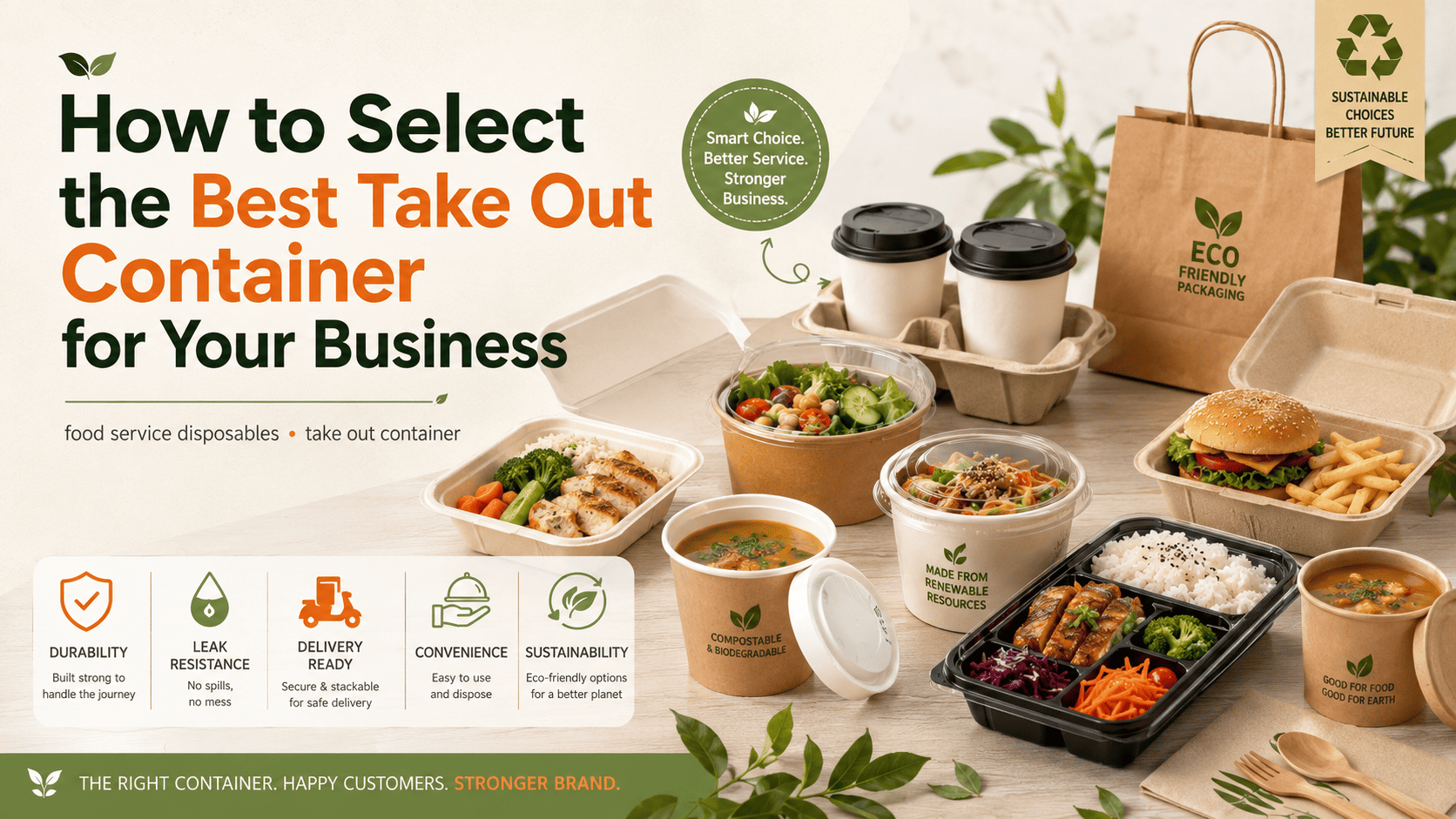
- How to Select the Best Take Out Container for Your Business
How to Select the Best Take Out Container for Your Business
2026.07.28
Latest newsIntroduction
Food service disposables have become an essential part of modern restaurants, cafés, catering companies, food delivery services, and institutional food operations. As more customers order food for takeout, delivery, office meals, outdoor events, and grab-and-go dining, packaging is no longer just a simple container. It directly affects food quality, presentation, safety, convenience, and the overall customer experience.
Choosing the right take out container is especially important for food service businesses that want to maintain food temperature, prevent leakage, protect texture, and deliver meals in a clean and professional way. The best packaging solution is not always the cheapest option or the most visually attractive design. It should match the food type, service model, delivery distance, portion size, branding needs, and daily operating workflow.
Table of Contents
- 1. Why Are Food Service Disposables Important in Modern Food Service?
- 2. What Types of Food Service Disposables Are Commonly Used?
- 3. How Do Businesses Select the Right Take Out Container?
- 4. What Should Businesses Consider When Evaluating Packaging Suppliers?
- 5. Sustainability and the Future of Food Service Disposables
- 6. Common Challenges with Take Out Containers
- 7. How Access Packaging Supports Food Service Businesses
- Conclusion
- FAQ
1. Why Are Food Service Disposables Important in Modern Food Service?
What Are Food Service Disposables?
Food service disposables refer to single-use packaging products commonly used by restaurants, cafés, caterers, food trucks, bakeries, convenience stores, and other food service businesses. These products may include take out containers, cups, lids, bowls, plates, trays, cutlery, napkins, bags, and other supporting packaging items.
The main purpose of food service disposables is to help businesses serve, pack, transport, and present food efficiently. In a fast-paced food service environment, disposable packaging supports quick service, reduces dishwashing needs, improves hygiene management, and allows customers to enjoy food away from the dining location.
Why Do Restaurants Depend on Disposable Packaging?
Restaurants depend on disposable packaging because takeout and delivery have become major parts of daily operations. A well-designed take out container helps protect food during transportation, keeps meals organized, reduces spills, and improves the customer’s impression of the brand.
For many businesses, packaging is now part of the dining experience. Customers may never step inside the restaurant, but they still judge the business by the way the food arrives. If the container leaks, collapses, traps too much steam, or makes the meal look messy, the customer experience suffers even if the food itself tastes good.
How Food Delivery Growth Changed Packaging Demand
The growth of food delivery has changed packaging expectations significantly. In the past, disposable containers were often used for short-distance takeout. Today, food may travel through delivery platforms, sit in insulated bags, experience movement during transportation, and arrive 20 to 40 minutes after preparation.
This means businesses need packaging that can handle real delivery conditions. Containers must support heat retention, moisture control, leak resistance, stackability, and easy handling. Packaging must also protect the shape, texture, and presentation of food, especially for meals with sauces, fried items, rice dishes, salads, soups, and combination menus.
What Factors Influence Packaging Selection Today?
Packaging selection today is influenced by more than price. Businesses must consider menu type, food temperature, portion size, delivery distance, customer convenience, storage space, branding needs, and sustainability goals.
For example, a hot noodle soup requires very different packaging from a cold salad, a bakery item, or a fried chicken meal. A container that works well for dry food may not work for saucy dishes. A lightweight box may be cost-effective, but it may not provide enough protection during delivery. The right packaging decision should balance function, cost, appearance, and reliability.
2. What Types of Food Service Disposables Are Commonly Used?
Disposable Cups, Lids, and Beverage Packaging
Disposable cups and lids are widely used for coffee shops, beverage stores, restaurants, events, offices, and convenience food service. Depending on the drink type, businesses may need hot cups, cold cups, insulated cups, dome lids, flat lids, strawless lids, or specialty beverage packaging.
Good beverage packaging should prevent leakage, support easy drinking, and match the temperature of the product. Hot drinks require cups that protect the customer’s hands and maintain warmth, while cold drinks may require clear cups, tight lids, and condensation-resistant designs. For businesses that sell both hot and cold beverages, choosing compatible cup and lid systems can improve operational efficiency.
Plates, Bowls, and Food Trays for Different Applications
Disposable plates, bowls, and trays are commonly used for dine-out meals, catering events, buffets, food courts, and prepared food service. Plates are suitable for dry or semi-dry food, while bowls are often used for soups, rice bowls, noodles, salads, and mixed dishes. Food trays can be used for meal sets, school lunches, institutional food service, or large-volume operations.
The right format depends on how the food is served and consumed. A bowl may be better for foods with sauce or broth, while a compartment tray may be more suitable for meal combinations. Businesses should consider whether the food will be eaten immediately, transported, reheated, or stored for a short period before consumption.
Cutlery, Napkins, and Supporting Disposable Products
Food service disposables are not limited to containers. Cutlery, napkins, straws, stirrers, sleeves, bags, and portion cups also play important roles in customer convenience. These supporting items may seem small, but they affect how easily customers can enjoy the food after purchase.
For delivery and takeout businesses, missing cutlery or poor-quality supporting items can create frustration. A strong container matters, but customers also expect complete packaging. Businesses should review the full packaging experience, from the main take out container to the smallest supporting accessory.
How Different Food Categories Require Different Packaging Solutions
Different food categories require different packaging solutions. Fried foods need ventilation to reduce sogginess. Soups and saucy dishes need secure lids and leak-resistant containers. Salads need freshness and moisture separation. Bakery products need presentation and protection from crushing. Hot entrées need insulation and structural strength.
This is why one container cannot solve every packaging need. Businesses with diverse menus may need multiple container types to match different product categories. A carefully planned packaging system can reduce complaints, improve delivery quality, and make operations smoother during busy hours.
3. How Do Businesses Select the Right Take Out Container?
Why Food Temperature Retention Matters
Temperature retention is one of the most important factors when selecting a take out container. Hot food should arrive warm, while cold food should remain fresh and appetizing. Poor packaging can cause food to cool too quickly, become soggy, or lose its intended texture.
For hot meals, businesses may need containers with insulation, tight-fitting lids, and material strength that can handle heat. For cold food, containers should protect freshness without trapping unnecessary moisture. Matching the container to the food temperature helps preserve food quality and improves customer satisfaction.
Leak Resistance and Food Protection Considerations
Leak resistance is critical for takeout and delivery. Sauces, soups, dressings, oils, and liquid-heavy foods can easily spill if the container is not properly designed. Leakage creates a poor customer experience, damages bags, affects other items in the order, and may even lead to refunds or complaints.
A good take out container should have a secure lid, proper sealing design, and enough structural strength to resist movement during transportation. Businesses should also test containers under real conditions, including stacking, delivery movement, temperature change, and handling by delivery personnel.
Choosing Containers Based on Portion Size and Menu Type
Portion size is another key factor. A container that is too large can make the food look small and increase packaging costs. A container that is too small may compress the food, cause spills, or make the presentation look messy.
Menu type also matters. Rice bowls, pasta, grilled meats, soups, salads, desserts, and family-style meals all require different packaging formats. Businesses should select containers based on actual menu needs instead of using one generic option for everything. Proper sizing improves presentation, reduces waste, and supports better portion control.
How Packaging Impacts Customer Experience
Packaging affects how customers perceive the food before they even take the first bite. A clean, sturdy, easy-to-open take out container gives customers confidence. A weak or messy container can make the meal feel lower in quality, even if the food is well prepared.
Customer experience also includes convenience. Can the customer open the lid easily? Can the container sit securely on a table? Is it easy to carry? Does it protect the food during transportation? These details may seem small, but they influence repeat purchases and brand impression.
4. What Should Businesses Consider When Evaluating Packaging Suppliers?
Product Quality and Consistency
Product quality and consistency are essential when choosing a packaging supplier. A restaurant or food service business needs containers that perform the same way every time. Inconsistent packaging can lead to unexpected leakage, weak lids, poor stacking, or customer complaints.
Businesses should evaluate material quality, lid fit, container strength, heat resistance, and overall appearance. A reliable supplier should be able to provide products that meet daily operational needs, not just look good in a catalog.
Supply Stability and Inventory Management
Supply stability is especially important for food service businesses with regular takeout or delivery volume. Running out of containers during peak hours can disrupt operations and affect sales. A packaging supplier should be able to support consistent inventory, timely delivery, and product availability.
Businesses should also consider storage space and ordering frequency. Packaging products take up room, so suppliers that can support stable replenishment help businesses manage inventory more effectively. A good supplier relationship reduces operational stress and helps prevent last-minute shortages.
Custom Packaging and Branding Opportunities
Custom packaging can help businesses strengthen brand identity. Logos, printed containers, branded sleeves, custom bags, and coordinated packaging designs can make takeout meals look more professional and memorable.
However, custom packaging should still meet practical food service needs. Branding should not come at the expense of durability, food protection, or cost control. Businesses should work with suppliers that understand both design and functionality, so the packaging looks good and performs well.
Why Industry Experience Matters in Packaging Partnerships
Industry experience matters because food service packaging is highly practical. A supplier with experience in restaurants, distributors, catering, and food service operations can better understand common challenges such as leakage, stacking, heat retention, portion control, and delivery performance.
Experienced packaging suppliers can help businesses compare materials, select appropriate take out containers, plan inventory, and choose packaging systems that fit different menu categories. This support can be especially valuable for growing businesses or operators with multiple locations.
5. Sustainability and the Future of Food Service Disposables
Growing Demand for Environmentally Conscious Packaging
Sustainability has become an important topic in food service disposables. Many customers are paying more attention to packaging waste, material choices, and environmental impact. Businesses are also looking for packaging options that align with corporate responsibility goals and changing market expectations.
Environmentally conscious packaging does not mean choosing a product only because it sounds green. Businesses still need to evaluate whether the packaging can protect food, handle delivery, meet safety requirements, and fit daily operations. Sustainability must work together with practicality.
Recyclable and Alternative Material Solutions
Many businesses are exploring recyclable packaging, paper-based products, fiber-based containers, alternative materials, and reduced-plastic solutions. These options may help support sustainability goals, depending on local recycling systems, material availability, and product application.
When evaluating alternative materials, businesses should consider performance, cost, supply stability, and suitability for specific food types. A material that works for dry bakery items may not work for hot soup or oily food. The best solution is not always the same for every menu.
Balancing Sustainability with Practical Food Service Needs
Food service businesses must balance sustainability with real operational needs. Packaging still needs to prevent leakage, maintain food quality, protect customers, and support efficient service. If a sustainable packaging option fails during delivery, the result may be food waste, customer complaints, and additional costs.
The most practical approach is to review packaging category by category. Businesses may choose recyclable beverage cups, stronger containers for hot meals, paper products for dry items, and alternative materials for specific menu lines. A balanced packaging strategy is more realistic than forcing one solution across every product.
How Consumer Preferences Are Influencing Packaging Decisions
Consumer preferences are influencing packaging decisions more than before. Customers often notice whether packaging feels excessive, difficult to dispose of, weak, or inconsistent with the brand’s values. For some customers, packaging quality can affect whether they order again.
At the same time, customers still expect convenience. They want packaging that is sturdy, clean, easy to carry, and suitable for the food. Businesses must understand that sustainability, function, and customer experience are all connected. A good packaging choice should support both brand image and daily food service performance.
6. Common Challenges with Take Out Containers
Preventing Leakage During Delivery
Leakage is one of the most common problems with take out containers. It can happen when the lid does not fit properly, the container material is too weak, the food is too liquid-heavy, or the container is not designed for delivery movement.
To reduce leakage, businesses should test containers with actual menu items. Sauces, soups, oils, and dressings should be tested under realistic conditions, including tilting, stacking, and transportation. A container that works on the counter may not perform the same way in a delivery bag.
Maintaining Food Quality During Transportation
Food quality can change quickly during transportation. Fried food may become soggy, hot food may lose temperature, cold food may become warm, and sauces may mix with ingredients too early. Packaging design plays an important role in controlling these issues.
Businesses may need vented containers for fried food, insulated containers for hot meals, separate compartments for sauces, or secure lids for liquid items. The goal is to deliver food as close as possible to the intended dining experience.
Managing Packaging Costs Without Sacrificing Performance
Packaging cost is a major concern for food service businesses, especially when order volume is high. However, choosing the cheapest container may create hidden costs through leakage, complaints, refunds, food waste, or poor customer reviews.
Businesses should evaluate total value instead of unit price alone. A slightly stronger container may reduce delivery problems. A better-sized container may improve portion presentation. A reliable supplier may reduce shortage risk. Cost control should not mean sacrificing basic performance.
Selecting Containers for Multiple Food Types
Many restaurants offer diverse menus, making packaging selection more complex. A business may need containers for hot entrées, cold salads, soups, side dishes, desserts, and beverages. Using one container for everything may seem simple, but it often creates quality issues.
A better approach is to group menu items by packaging needs. Foods with sauces, fried foods, cold foods, and combo meals may each require different solutions. This helps businesses standardize packaging while still protecting food quality.
7. How Access Packaging Supports Food Service Businesses
Comprehensive Food Service Disposable Solutions
Access Packaging supports food service businesses by offering a wide range of food service disposables for different operational needs. From take out containers and cups to lids, trays, bowls, and supporting disposable products, a comprehensive product selection helps restaurants and distributors manage packaging more efficiently.
A complete packaging solution allows businesses to source multiple product categories from one partner, reducing the complexity of purchasing and inventory management. This is especially useful for operators that need consistent packaging across multiple menu items or locations.
Packaging Products Designed for Diverse Food Applications
Different food applications require different packaging performance. Access Packaging understands that hot meals, cold dishes, beverages, bakery items, sauces, and prepared foods all need different container designs and materials.
By offering packaging options for diverse food categories, Access Packaging helps businesses identify practical solutions based on menu type, portion size, temperature needs, and transportation requirements. This helps operators improve food protection and customer experience.
Reliable Supply and Long-Term Industry Experience
Reliable supply is a key part of food service packaging. Restaurants and distributors need products that are available when they need them, especially during peak seasons, busy service hours, or business expansion. Access Packaging’s industry experience supports long-term packaging planning and stable supply relationships.
A supplier with long-term experience can help businesses avoid common packaging problems, compare product options, and maintain consistency across daily operations. This makes packaging less of a last-minute concern and more of a dependable part of the food service system.
Supporting Restaurants, Distributors, and Food Service Operations
Access Packaging supports a range of food service operations, including restaurants, cafés, food distributors, catering companies, and other businesses that depend on reliable disposable packaging. Whether a business needs standard take out containers or broader food service disposable solutions, the right packaging partner can help improve efficiency and customer satisfaction.
For growing food service businesses, packaging decisions can affect brand image, delivery performance, and operational consistency. Working with an experienced supplier helps businesses select packaging that supports both daily service and long-term growth.
Conclusion
Food service disposables and take out containers play a critical role in today’s restaurant, delivery, and food service industries. Beyond simply holding food, packaging affects food quality, transportation performance, customer satisfaction, and operational efficiency. Businesses that carefully evaluate packaging materials, container design, supplier reliability, and sustainability goals are better positioned to meet evolving market demands.
Companies such as Access Packaging help food service operators identify practical packaging solutions that support both daily operations and long-term growth. By choosing the right take out container and working with a reliable packaging supplier, businesses can improve customer experience, reduce packaging problems, and build a stronger food service operation.
FAQ
What are food service disposables?
Food service disposables include single-use packaging products such as cups, containers, lids, cutlery, trays, bowls, napkins, bags, and other items commonly used by restaurants and food service businesses.
How do I choose the right take out container?
Businesses should consider food type, temperature retention, leak resistance, transportation requirements, portion size, material, and customer convenience when selecting take out containers.
Why are take out containers important for food delivery?
Proper take out containers help preserve food quality, prevent spills, protect presentation, and improve the customer experience during transportation.
What industries use food service disposables?
Restaurants, cafés, food trucks, catering companies, convenience stores, institutional food service providers, and food distributors commonly use disposable packaging products.
Can food service disposables support sustainability goals?
Yes. Many businesses are exploring recyclable materials, alternative packaging solutions, reduced-plastic options, and responsible sourcing practices to align with sustainability initiatives.
Contact
If you need a consultation or want to request a quote, please feel free to contact us.
Contact us by phone
 1-718-599-1668
 Contact us via email